
LAB-GROWN GEMSTONES, EXPLAINED
Rather than forming over millions of years under the earth’s surface, lab-grown gemstones are created in controlled laboratory environments that precisely replicate the conditions responsible for natural gem formation. The result is a ruby, sapphire, or emerald that is physically and chemically identical to a mined stone — grown with greater consistency, available in richer color, and free from the ethical and environmental concerns associated with traditional gemstone mining.

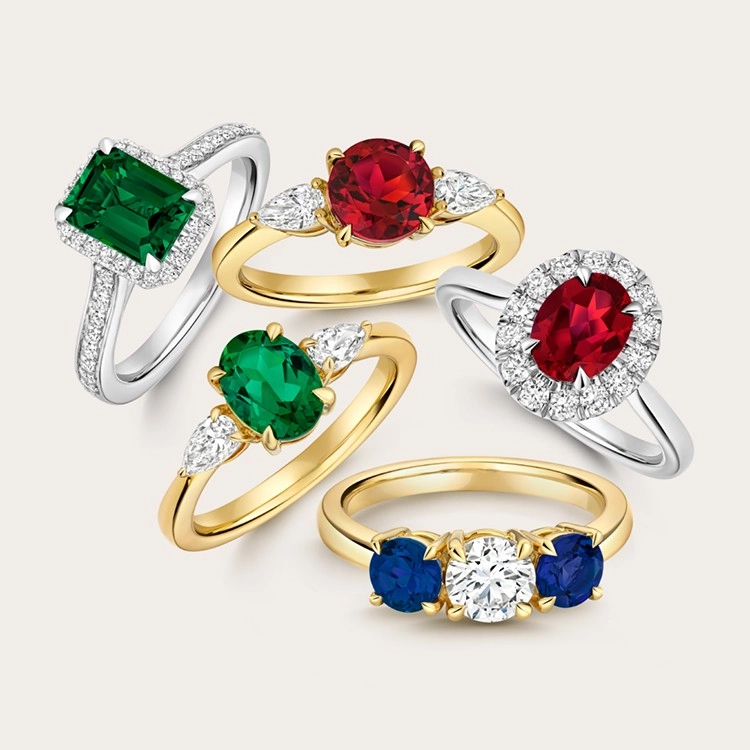
WHAT ARE LAB-GROWN GEMSTONES?
Lab-grown gemstones — also called lab-created gemstones or created gemstones — are genuine precious stones produced in a laboratory rather than extracted from the earth. They are not simulants, imitations, or glass. A lab-grown ruby is a real ruby. A lab-grown sapphire is a real sapphire. A lab-grown emerald is a real emerald.
The gemological and scientific communities recognize lab-grown gemstones as identical to their mined counterparts in every measurable way: chemical formula, crystal structure, refractive index, hardness, and optical properties. The Gemological Institute of America (GIA) grades lab-grown colored gemstones using the same standards applied to mined stones.
What makes them different is origin — and for many buyers today, that difference is a reason to choose lab-grown, not a reason to avoid it.
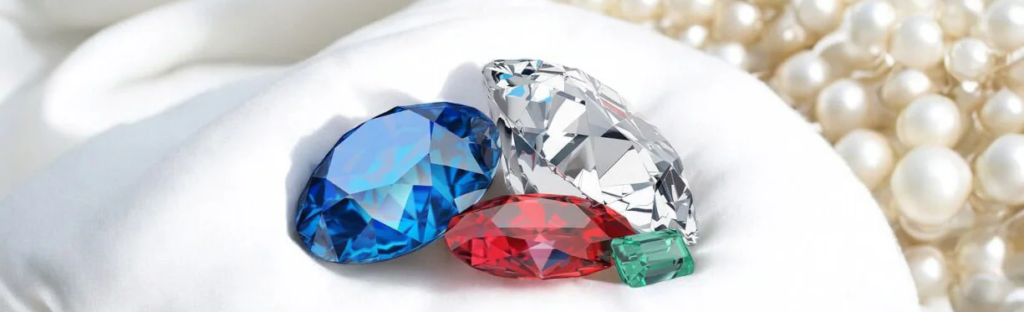
WHATS THE DIFFERENCE OF LAB-GROWN VS. NATURAL GEMSTONES ?
The question we hear most often is: are lab-grown gemstones as good as natural ones?
In terms of physical properties: yes, completely. A lab-grown ruby has the same hardness (9 on the Mohs scale), the same refractive index, and the same red fluorescence as a mined ruby. A lab-grown emerald has the same vivid green color and the same chemical composition as a Colombian emerald. The differences are not in quality – they are in origin and price.
In terms of inclusions: lab-grown gemstones typically have fewer inclusions than mined stones of equivalent price, and different inclusion types. This is generally a quality advantage. Heavily included mined emeralds are routinely treated with oils or resins to improve their clarity – lab-grown emeralds rarely require this treatment.
In terms of color: lab-grown gemstones can achieve rich, saturated color with greater consistency than mined stones. Fine natural rubies and sapphires of deep, even colour are exceptionally rare. Lab-grown versions offer the same vivid colour reliably and at a fraction of the cost.
In terms of price: lab-grown gemstones are significantly more accessible than their mined equivalents. Fine natural rubies and alexandrite in particular command some of the highest per-carat prices of any colored stone. Lab-grown versions offer the same beauty and physical properties at a price point that makes fine gemstone jewelry genuinely accessible.
In terms of ethics: lab-grown gemstones avoid the environmental damage and human rights concerns associated with artisanal gemstone mining in regions including Myanmar, Mozambique, Colombia, and parts of East Africa. For buyers who care about where their jewelry comes from, lab-grown is a straightforward choice.
LAB-GROWN GEMSTONES VS. SIMULANTS: AN IMPORTANT DISTINCTION
Lab-grown gemstones are sometimes confused with simulants – and they are not the same thing.
A simulant is a stone that resembles another gemstone but has a different chemical composition entirely. Cubic zirconia (CZ) is a diamond simulant – it looks like a diamond but is chemically and physically different. Synthetic spinel was historically used to simulate sapphire. Moissanite is a silicon carbide stone sometimes used as a diamond alternative.
A lab-grown gemstone is the real stone, grown in a lab. A lab-grown sapphire is corundum – the same mineral as a natural sapphire. It is not “sapphire-colored glass” or a lookalike. This distinction matters both scientifically and from a value perspective.
At Asrine.com, every gemstone in our collection is a genuine lab-grown precious stone — not a simulant or imitation.
ASRINE has offered lab-grown gemstones since our founding, and every stone in our collection is selected to the same quality standards as our lab-grown diamonds. Our gemstone jewelry is available in a full range of styles – from engagement rings, bracelets, earrings and pendants to everyday fine jewelry.
HOW ARE LAB-GROWN GEMSTONES MADE?
Different gemstone types are created using different processes, each designed to replicate the specific conditions under which that stone forms in nature.
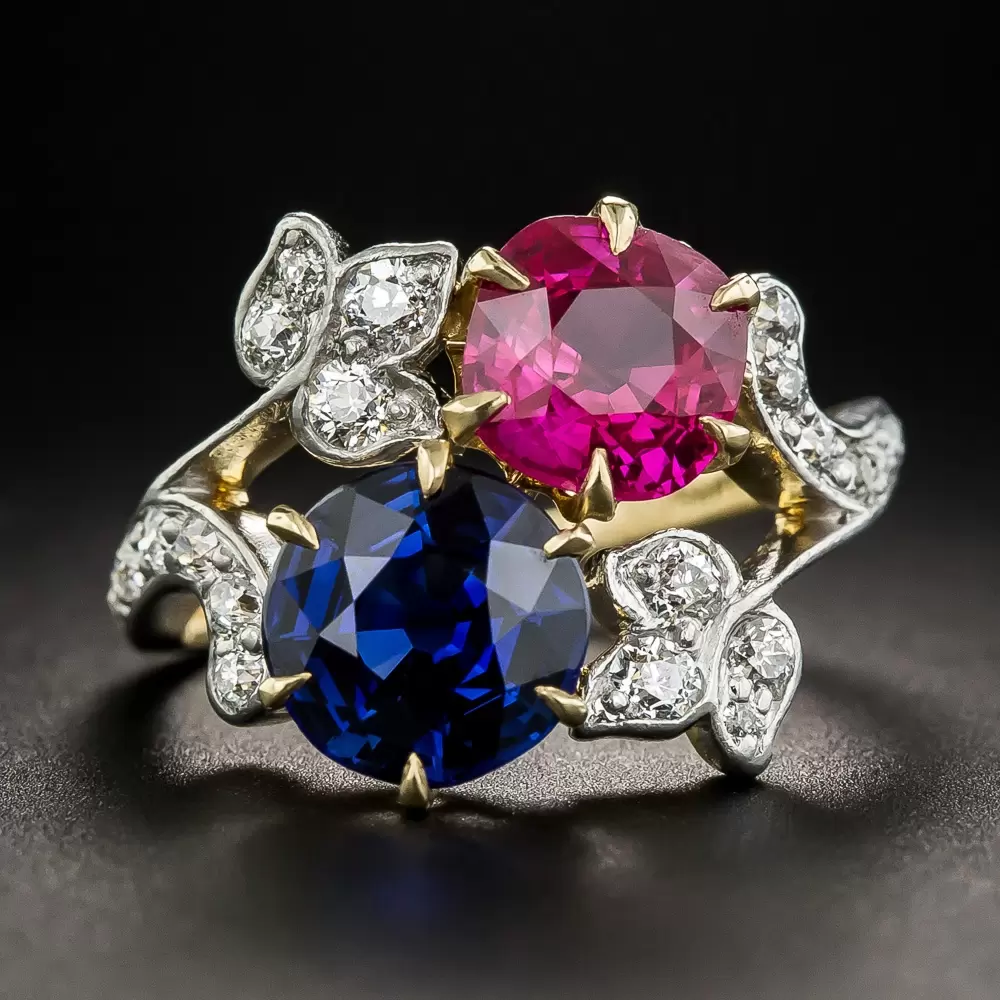
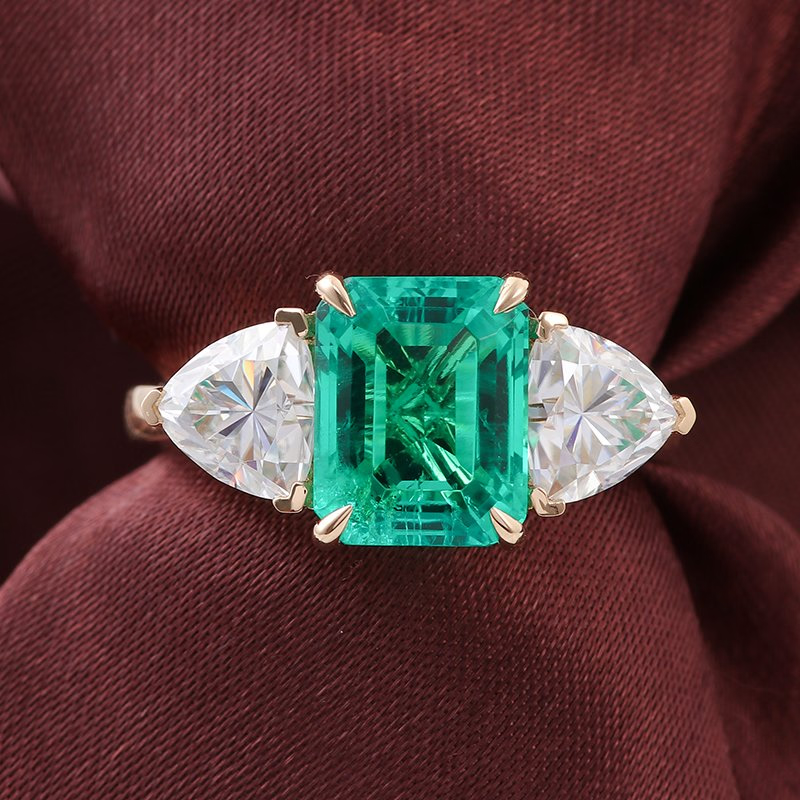
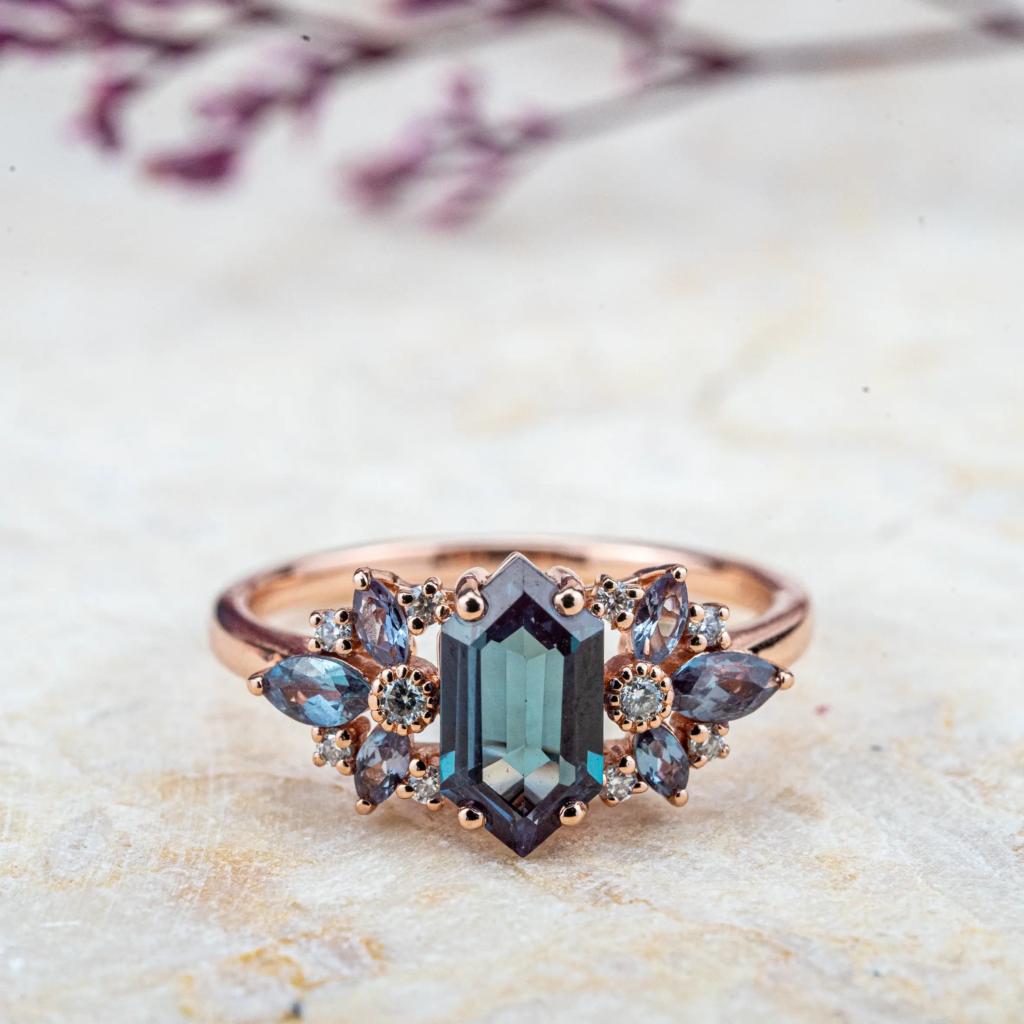
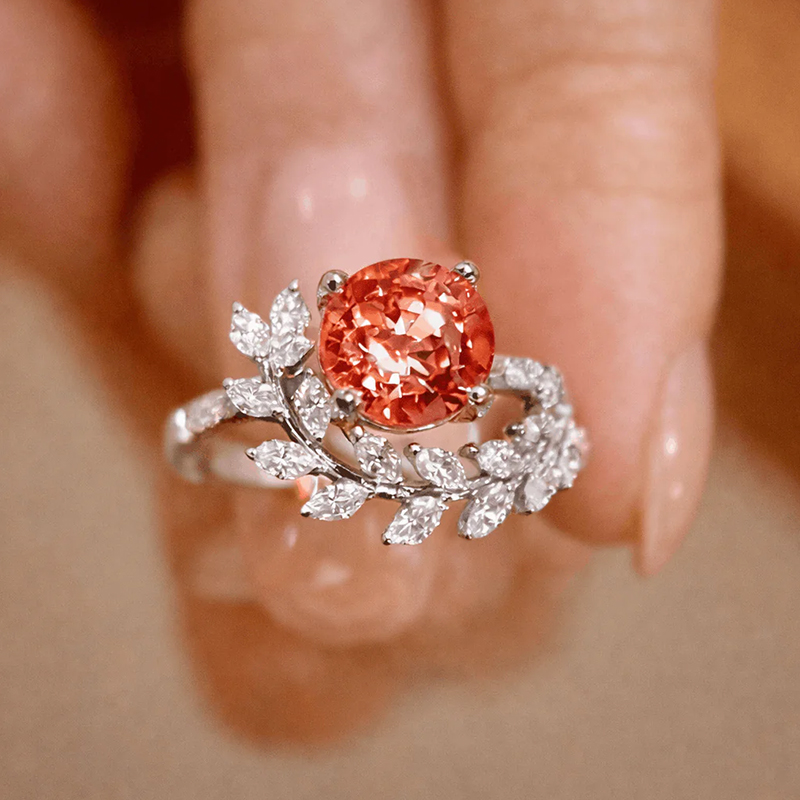
LAB-GROWN GEMSTONES AS BIRTHSTONE GIFTS
A piece of fine jewelry becomes something more personal when it carries meaning beyond its beauty — and few things are more personal than a birthstone. Each gemstone in MiaDonna’s collection corresponds to one or more birth months, making lab-grown gemstone jewelry a thoughtful and lasting gift for birthdays, anniversaries, and milestone moments.
- MAY: Emerald
- JUNE: Alexandrite
- JULY: Ruby
- SEPTEMBER: Sapphire & Padparadscha
Because lab-grown gemstones share the same physical and optical properties as their mined counterparts, they carry the same symbolic significance — at a price point that makes fine birthstone jewelry genuinely accessible. Every stone can be set into a custom design, making it easy to create something truly personal for the people who matter most.